Quick Answer
Context determines the intended meaning when an Arabic word carries more than one meaning or appears without short vowels. The word عَيْن (ʿayn, eye/spring), for example, may refer to the organ of sight or a natural water spring. Only the surrounding words reveal which meaning is intended.
Context can also clarify pronunciation, morphological form, figurative meaning, and the most suitable translation. For this reason, words should not be learned in isolation. It is better to learn each word within a natural sentence that reveals its meaning and use.
Introduction
An Arabic learner opens a dictionary, searches for a new word, and finds five or more meanings. They choose the first meaning, place it in the sentence, and then discover that the resulting translation sounds strange or illogical. The problem is not the dictionary or the learner's memory. The problem is that the word was interpreted outside its natural environment.
Words do not live in isolation. The word عَيْن (ʿayn, eye/spring) may refer to the organ of sight, a natural water spring, or a person secretly observing others on behalf of an organization. The word وَجْه (wajh, face/aspect) may refer to a person's face or one aspect of an issue. The letters remain unchanged, but the surrounding words lead us to a different meaning each time. This is the function of context in Arabic.
Context becomes even more important because Arabic texts are usually written without short-vowel marks. You may encounter the letters ع ل م in a text, but their pronunciation is not always clear from their written form alone. They may be read as عِلْم (ʿilm, knowledge), عَلَم (ʿalam, flag), or عَلِمَ (ʿalima, he knew). The sentence reveals the intended pronunciation, grammatical function, and meaning.
For this reason, memorizing one translation for every word is not enough when studying Arabic vocabulary. A translation may be a useful starting point, but it does not tell you where the word is used, which words commonly appear with it, whether its meaning is literal or figurative, or whether it belongs in an everyday conversation or a formal text.
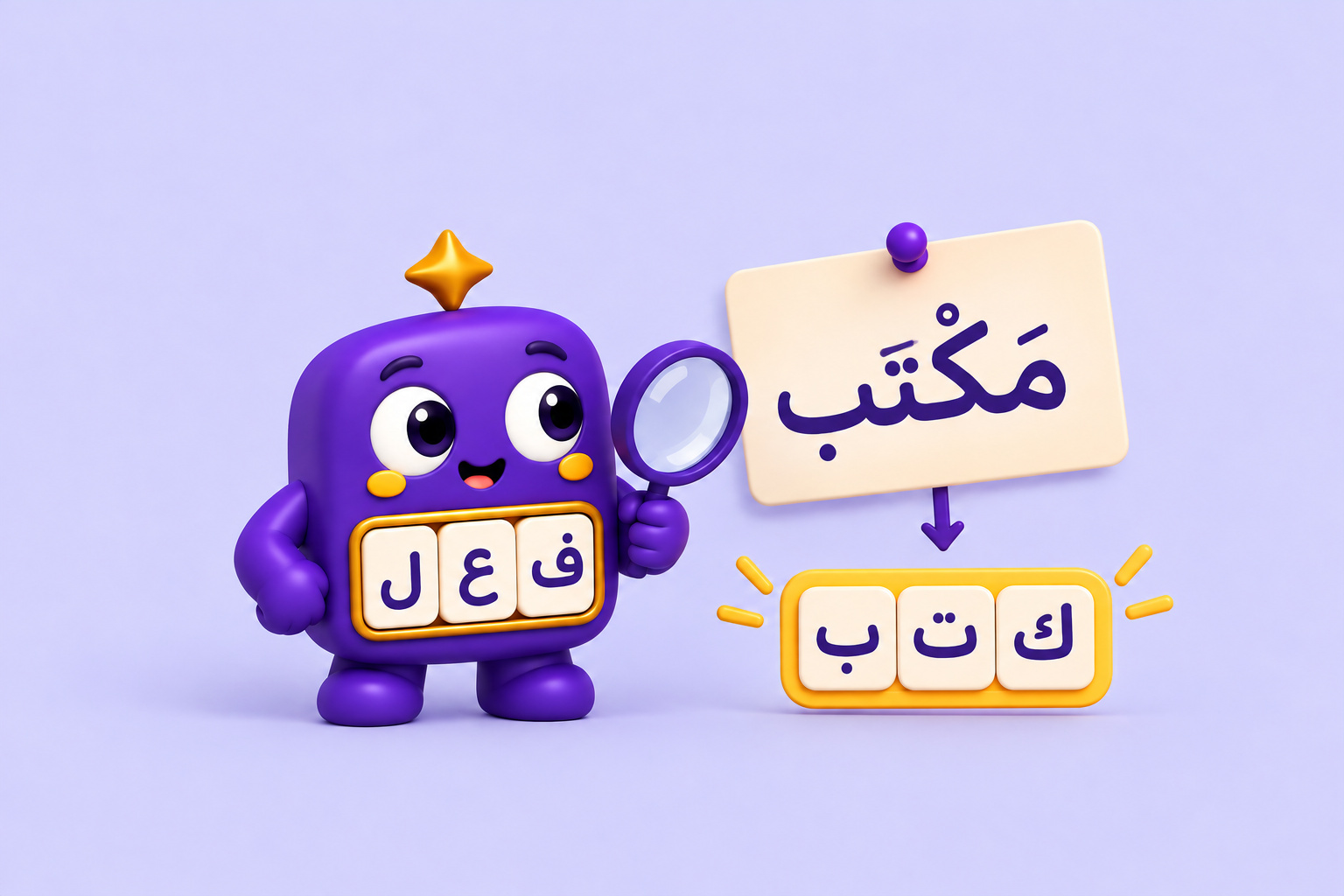
Understanding an Arabic word meaning requires three elements working together: the word's structure, the words surrounding it, and the situation in which it is used. The root and pattern help identify the morphological family, while context determines which meaning from that family is intended in the sentence. (If roots are new to you, begin with what an Arabic root is.)
In this article, we will explore how context works on several levels, from identifying meaning and pronunciation to understanding figurative language and choosing an appropriate translation. We will also learn a practical method that helps beginners treat a new word as part of a sentence rather than as an isolated flashcard with a single English equivalent.
What Is Context?
Context is the environment in which a word appears. It is not limited to the two words immediately before or after it. Context may include:
- The complete sentence
- The paragraph or general topic
- The speaker and listener
- The place and time
- The type of text
- The purpose of the statement
- Words that native speakers commonly use together
Consider the word بَارِد (bārid, cold):
شَرِبْتُ مَاءً بَارِدًا. Sharibtu māʾan bāridan. "I drank cold water."
Here, the meaning relates to temperature.
However, we may also say:
كَانَ رَدُّهُ بَارِدًا. Kāna radduhu bāridan. "His response was cold."
Here, we are not talking about temperature. We are describing a response that lacks warmth, friendliness, or enthusiasm. We know this because the word رَدّ (radd, response) changes the way we interpret the adjective.
The study of meaning generally distinguishes between a word's basic sense and the meaning determined by its use and the situation. Alan Cruse devotes substantial sections of his work on semantics and pragmatics to explaining multiple meanings, lexical relationships, and the role of context in reaching the intended interpretation (Meaning in Language).
Why Is the Dictionary Meaning Alone Not Enough?
A dictionary presents the possibilities, while the sentence selects the appropriate one.
If you look up ثَقِيل (thaqīl, heavy), you may find meanings connected to weight, difficulty, slowness, or an unpleasant social presence. The intended meaning changes according to the noun being described.
| Example | Translation | Intended Meaning |
|---|---|---|
| حَمَلَ صُنْدُوقًا ثَقِيلًا. | He carried a heavy box. | Great in weight |
| كَانَ الدَّرْسُ ثَقِيلًا عَلَيْهِ. | The lesson was difficult for him. | Difficult or exhausting |
| مَرَّ الوَقْتُ ثَقِيلًا. | Time passed slowly. | Slowly and laboriously |
| شَعَرَ بِثِقَلِ المَسْؤُولِيَّةِ. | He felt the weight of responsibility. | A figurative burden |
This does not mean that these meanings are entirely separate. A conceptual relationship connects them, but context determines which aspect is intended.
This is why example sentences are essential when learning Arabic vocabulary. Learners do not merely need to know that a word has several meanings; they need to see the circumstances in which each meaning appears.
The design of modern educational frequency dictionaries reinforces this principle. Buckwalter and Parkinson's A Frequency Dictionary of Arabic does not merely present common words and their translations. It also includes examples and information about usage and the distribution of words across different types of texts and dialects, based on a large corpus of written and spoken Arabic.
How Does Context Determine the Meaning of a Word with Multiple Meanings?
A single word may carry several related or distinct meanings. Consider عَيْن (ʿayn):
1. The Organ of Sight
أَغْلَقَ الطِّفْلُ عَيْنَيْهِ. Aghlaqa al-ṭiflu ʿaynayhi. "The child closed his eyes."
The verb أَغْلَقَ (aghlaqa, closed) and the dual form عَيْنَيْهِ (ʿaynayhi, his two eyes) make the meaning clear.
2. A Water Spring
تَفَجَّرَتْ عَيْنٌ بَيْنَ الصُّخُورِ. Tafajjarat ʿaynun bayna al-ṣukhūr. "A spring gushed out between the rocks."
The words تَفَجَّرَتْ (tafajjarat, gushed out) and الصُّخُور (al-ṣukhūr, rocks) lead us to the meaning of a natural spring.
3. A Person Who Watches Secretly
أَرْسَلَ القَائِدُ عَيْنًا لِمُرَاقَبَةِ الطَّرِيقِ. Arsala al-qāʾidu ʿaynan li-murāqabati al-ṭarīq. "The commander sent an informant to watch the road."
The verb أَرْسَلَ (arsala, sent) and the word مُرَاقَبَة (murāqabah, monitoring) reveal that the intended meaning is a person who watches secretly, not a detached human eye.
We should therefore ask not only, "What does this word mean?" but also, "What does it mean in this sentence?" This small change in the question transforms the entire way we study context in Arabic.
How Does Context Help Us Read Unvowelled Arabic Words?
Short-vowel marks are omitted from most Arabic texts written for adults. The same group of letters may therefore permit several readings.
Consider the letters:
ع ل م
They may represent:
- عِلْم (ʿilm, knowledge)
- عَلَم (ʿalam, flag)
- عَلِمَ (ʿalima, he knew)
- عُلِمَ (ʿulima, it became known)
Now place them in sentences:
العِلْمُ أَسَاسُ التَّقَدُّمِ. Al-ʿilmu asāsu al-taqaddum. "Knowledge is the foundation of progress."
رُفِعَ العَلَمُ فَوْقَ المَبْنَى. Rufiʿa al-ʿalamu fawqa al-mabnā. "The flag was raised above the building."
عَلِمَ المُدِيرُ بِالمُشْكِلَةِ. ʿAlima al-mudīru bi-al-mushkilah. "The manager learned about the problem."
In the first sentence, the word functions as the topic of a statement about knowledge. In the second, it appears with the verb رُفِعَ (rufiʿa, was raised). In the third, it functions as a verb whose subject is المُدِير (al-mudīr, the manager). Grammatical structure and the sentence's general meaning work together to identify the correct reading.
Learners are not the only ones who face this challenge. Computational processing of Arabic also relies on surrounding words to choose among several possible morphological analyses. Researchers define morphological disambiguation as selecting the most likely analysis of a word within its context rather than analyzing its isolated form (Pasha et al., 2014; Habash, 2010). The same principle drives how Arabic speakers recognize new words.
What Is the Relationship Between Context, Roots, and Patterns?
The root reveals relationships between words, the pattern contributes morphological and semantic information, and context determines the final intended meaning. (See root vs. pattern for the division of labor.)
Consider the root family ح م ل:
- حَمَلَ (ḥamala, to carry)
- حَامِل (ḥāmil, carrier/pregnant)
- مَحْمُول (maḥmūl, carried/portable)
- حِمْل (ḥiml, load)
- حَمْل (ḥaml, pregnancy/carrying)
The shared root helps you recognize the general relationship, but the root alone does not reveal the intended meaning.
حَمَلَ العَامِلُ الصُّنْدُوقَ. Ḥamala al-ʿāmilu al-ṣundūqa. "The worker carried the box."
حَمَلَتِ الرِّيحُ الغُبَارَ. Ḥamalati al-rīḥu al-ghubāra. "The wind carried the dust."
حَمَلَ كَلَامُهُ تَحْذِيرًا وَاضِحًا. Ḥamala kalāmuhu taḥdhīran wāḍiḥan. "His words carried a clear warning."
The third example does not describe physically carrying an object. Its meaning is figurative: the words contained or conveyed a warning. The root provides the starting point, the pattern identifies the type of word, and the Arabic word meaning within the sentence is completed by context.
This approach reflects the central idea behind Rooto: words should not be learned as isolated units. A word is connected to its root, pattern, and family before we see it functioning within a genuine example. Why Arabic word patterns are important for fluency develops the same point.
How Does Grammatical Structure Reveal Meaning?
Meaning does not come from vocabulary alone. Word order and grammatical relationships determine who did what and to whom.
Consider the verb ضَرَبَ (ḍaraba, hit/struck). Its most familiar meaning is to hit, but it also appears in other expressions:
ضَرَبَ اللَّاعِبُ الكُرَةَ. Ḍaraba al-lāʿibu al-kurata. "The player hit the ball."
ضَرَبَ الرَّجُلُ مَثَلًا. Ḍaraba al-rajulu mathalan. "The man gave an example."
ضَرَبَ المُسَافِرُ خَيْمَتَهُ. Ḍaraba al-musāfiru khaymatahu. "The traveller pitched his tent."
The direct object changes the expected meaning of the verb:
- الكُرَة (al-kurah, the ball) leads to the meaning of striking.
- مَثَلًا (mathalan, an example) leads to the meaning of giving an example.
- خَيْمَة (khaymah, tent) leads to the meaning of pitching a tent.
Memorizing only ضَرَبَ = hit will not help learners understand the other two examples. It is better to learn common combinations as units of actual usage:
- ضَرَبَ مَثَلًا (ḍaraba mathalan, to give an example)
- ضَرَبَ خَيْمَةً (ḍaraba khaymatan, to pitch a tent)
How Does the Situation Change the Meaning of an Expression?
The words may be clear at the dictionary level, but the speaker's true intention may emerge only through the situation and tone of voice.
Imagine that someone arrives after a meeting has already ended. A colleague says:
جِئْتَ مُبَكِّرًا جِدًّا! Jiʾta mubakkiran jiddan! "You came very early!"
The literal meaning praises the person for arriving early. In this situation, however, the statement may be sarcastic, with the actual meaning being, "You are extremely late."
In another situation, someone may say:
البَابُ مَفْتُوحٌ. Al-bābu maftūḥun. "The door is open."
This may be a simple description, an invitation to enter, a reminder to close the door, or a warning about a security problem. The words remain the same, but the speaker's intention changes.
This illustrates the difference between the sentence's linguistic meaning and what the speaker intends to achieve by using it. Context in Arabic therefore includes the situation and the relationship between the speakers, not merely the written words.
Why Does a Word's Translation Change According to Context?
One of the most common mistakes is assuming that every Arabic word has one fixed English equivalent. Languages do not divide meaning in identical ways, so one Arabic word may require several different translations.
Consider the word خَطَر (khaṭar):
هُنَاكَ خَطَرٌ عَلَى الطَّرِيقِ. Hunāka khaṭarun ʿalā al-ṭarīq. "There is danger on the road."
Now consider the expression:
خَطَرَتْ لِي فِكْرَةٌ. Khaṭarat lī fikratun. "An idea occurred to me."
The verb cannot be translated as danger in the second sentence. The context and morphological form reveal that this is another use associated with the same root.
The same applies to فَاتَ (fāta):
فَاتَنِي القِطَارُ. Fātanī al-qiṭāru. "I missed the train."
فَاتَ الوَقْتُ. Fāta al-waqtu. "It is too late. / The time has passed."
فَاتَهُ التَّفْصِيلُ المُهِمُّ. Fātahu al-tafṣīlu al-muhimmu. "He missed the important detail."
A good translation does not begin by replacing one word with another. It begins by understanding the event and the relationships among the participants in the sentence. Once the Arabic word meaning becomes clear within its context, selecting an accurate and natural English equivalent becomes easier.
How Can We Learn Arabic Vocabulary in Context?
Learners do not need to memorize an entire paragraph with every word. A short, natural sentence may be enough if it clearly demonstrates the word's use.
1. Memorize a Phrase, Not an Isolated Word
Instead of memorizing:
قَرَار (qarār, decision)
learn:
اِتَّخَذَ قَرَارًا. Ittakhadha qarāran. "He made a decision."
This way, you learn the noun together with the verb commonly used with it.
2. Write Two Examples for Two Different Meanings
When you encounter a word with multiple meanings, do not place every meaning in a long list. Select two common meanings and write one sentence for each.
وَضَعَ الكِتَابَ عَلَى الطَّاوِلَةِ. Waḍaʿa al-kitāba ʿalā al-ṭāwilah. "He put the book on the table."
وَضَعَ خُطَّةً جَدِيدَةً. Waḍaʿa khuṭṭatan jadīdatan. "He developed a new plan."
3. Connect the Word to Its Root and Family
When learning نَجَاح (najāḥ, success), also look at:
- نَجَحَ (najaḥa, to succeed)
- نَاجِح (nājiḥ, successful)
- يَنْجَحُ (yanjaḥu, he succeeds)
Then place each word in a short example. This transforms Arabic vocabulary into an interconnected network rather than a collection of isolated flashcards. The habit of reviewing each word later is covered in how to remember Arabic words forever.
4. Notice the Surrounding Words
Ask:
- Which verb commonly appears with this noun?
- Which preposition is used?
- Which adjective accompanies it?
- Is the expression formal or conversational?
- Is the meaning literal or figurative?
5. Review the Word in a New Sentence
Do not repeat the same example every time. Once you understand the word, use it in a situation connected to your own life. If you learn مَوْعِد (mawʿid, appointment), write:
لَدَيَّ مَوْعِدٌ مَعَ الطَّبِيبِ غَدًا. Ladayya mawʿidun maʿa al-ṭabībi ghadan. "I have an appointment with the doctor tomorrow."
Practical Training in Identifying Meaning
Read the following sentences and try to identify the meaning of the highlighted word before reading the explanation.
First Word: مِفْتَاح
أَدْخَلَ المِفْتَاحَ فِي البَابِ. Adkhala al-miftāḥa fī al-bāb. "He inserted the key into the door."
Here, the word refers to the tool used to open a door.
الصَّبْرُ مِفْتَاحُ النَّجَاحِ. Al-ṣabru miftāḥu al-najāḥ. "Patience is the key to success."
Here, it refers to the essential means of reaching success.
Second Word: جَرَى
جَرَى الطِّفْلُ فِي الحَدِيقَةِ. Jarā al-ṭiflu fī al-ḥadīqah. "The child ran in the garden."
Here, the meaning is to run.
جَرَى الاِجْتِمَاعُ صَبَاحًا. Jarā al-ijtimāʿu ṣabāḥan. "The meeting took place in the morning."
Here, it refers to the meeting taking place or being held.
Third Word: رَأْس
غَسَلَ الطِّفْلُ رَأْسَهُ. Ghasala al-ṭiflu raʾsahu. "The child washed his head."
The meaning is literal.
وَقَفَ المُدِيرُ عَلَى رَأْسِ الفَرِيقِ. Waqafa al-mudīru ʿalā raʾsi al-farīq. "The manager stood at the head of the team."
Here, the meaning relates to leadership or being in the leading position.
These examples show that learners do not guess meanings randomly. They gather clues from the verb, the noun, and the broader topic.
Did You Know?
A word may be extremely common without necessarily being easy. Many high-frequency words perform several functions and appear in a wide variety of expressions. It is therefore not enough for learners to know their basic translation. They need to encounter them in different sentences and situations.
A Frequency Dictionary of Arabic identifies the most frequently occurring words through a corpus containing written and spoken material. It also shows how usage varies according to text type and dialect. This helps explain why varied examples are more useful than memorizing a single English equivalent for each word.
Summary
- A word does not carry its complete meaning when isolated from its sentence.
- Context determines the intended meaning of words with multiple senses.
- Surrounding words help readers interpret unvowelled Arabic texts.
- The root reveals the morphological family, the pattern adds information about the form, and context determines the final meaning.
- A literal translation may be correct in the dictionary but unsuitable for the sentence.
- Learn each word with a common expression and a natural example.
- Notice the verbs, prepositions, and adjectives that accompany the word.
- Use a word in more than one sentence to understand the boundaries of its meaning.
- Studying an Arabic word meaning within genuine sentences makes comprehension faster and usage more natural.
Frequently Asked Questions
Should I Memorize Every Meaning of an Arabic Word?
No. Begin with the meaning that appears most frequently in the texts you read. Add another meaning when you encounter it within a clear context. Memorizing a long list of meanings at once may increase confusion.
What Is the Difference Between Linguistic Context and Situational Context?
Linguistic context consists of the words and sentences surrounding a word. Situational context includes the speaker, listener, place, time, and purpose of the communication.
Can Context Help Me Identify the Correct Vowels?
Yes. Grammatical structure and the general meaning can identify the appropriate reading. The letters ع ل م may be read as عِلْم (ʿilm, knowledge), عَلَم (ʿalam, flag), or عَلِمَ (ʿalima, he knew), depending on the sentence.
Is the Root Enough to Determine a Word's Meaning?
No. The root reveals a general connection among the members of a family, but it does not determine the final meaning. The pattern, context, and established usage are also necessary.
Why Does Literal Translation Not Always Work?
Because the boundaries of meaning differ between Arabic and English. An Arabic word may require different English equivalents depending on the grammatical structure and situation.
How Many Sentences Should I Learn with a Word?
At first, one natural sentence is enough for each common meaning. If the word has several meanings, use two examples that clarify the difference between two basic senses.
Should I Learn a Word from a Dictionary or from a Text?
Use both. A text reveals how the word is used, while a dictionary helps verify its meanings and forms. The best approach is to begin with the sentence, consult the dictionary, and then write an example of your own.
What Is the Best Way to Review a Word in Context?
Hide the word's translation and read the entire sentence. Try to infer the meaning from the verb, topic, and surrounding words. Then compare your interpretation with the correct meaning.
Discover a Word Through Its Family with Rooto
The next time you encounter a new word, do not begin with its translation. Give yourself ten seconds to read the sentence and look for three clues: the nearby verb, the general topic, and any words belonging to the same family.
Then go to the Rooto Machine and press SPIN. Read the derived word and its Arabic example, and try to predict its meaning before looking at the English translation. Notice how the root, pattern, and sentence work together to guide you toward the meaning.
Turn every spin into a small question: what revealed the meaning this time—the root, the pattern, or the context?
References Used
- Cruse, D. Alan. Meaning in Language: An Introduction to Semantics and Pragmatics. Third edition, Oxford University Press, 2011.
- Habash, Nizar Y. Introduction to Arabic Natural Language Processing. Morgan & Claypool Publishers, 2010.
- Buckwalter, Tim, and Dilworth Parkinson. A Frequency Dictionary of Arabic: Core Vocabulary for Learners. Routledge, 2011.
- Pasha, Arfath, Mohamed Al-Badrashiny, Mona Diab, Ahmed El Kholy, Ramy Eskander, Nizar Habash, Manoj Pooleery, Owen Rambow, and Ryan M. Roth. "MADAMIRA: A Fast, Comprehensive Tool for Morphological Analysis and Disambiguation of Arabic." Proceedings of the Ninth International Conference on Language Resources and Evaluation, 2014.