Quick Answer
Morphological patterns are templates into which root letters are inserted to form words with related meanings. Some of the most useful verb patterns for beginners are فَعَلَ (faʿala), فَعَّلَ (faʿʿala), فَاعَلَ (fāʿala), أَفْعَلَ (afʿala), and تَفَعَّلَ (tafaʿʿala). Knowing these patterns helps you analyze words, anticipate aspects of their meanings, and connect verbs that share the same root. A pattern's meaning is not an absolute rule, however, so a word should always be learned in context.
Introduction
When beginners see words such as عَلِمَ (ʿalima, "to know"), عَلَّمَ (ʿallama, "to teach"), and تَعَلَّمَ (taʿallama, "to learn"), they may look like three separate verbs that must each be memorized on their own. An Arabic speaker, however, notices a clear relationship among them: they are all built from the root ع ل م, which is generally associated with knowledge and learning.
The difference among these words does not come from the root alone. Each verb has been placed in a different morphological template, and that template has given the original meaning a new direction. عَلِمَ refers to possessing knowledge, عَلَّمَ to passing it on to someone else, and تَعَلَّمَ to acquiring it.
This is where Arabic morphological patterns become important. A pattern is not a theoretical chart designed to make Arabic harder to study. It is a tool that helps you see the system within the language's words. Once you recognize a pattern, you will no longer see a verb as a long string of letters. You will begin to separate the root letters from the added letters and connect the word to others in the same family.
Knowing the patterns does not mean that you will immediately be able to guess the precise meaning of every verb you encounter. Patterns have common meanings, but they are not fixed equations. A pattern may express causation in many verbs yet carry a different meaning in another. A pattern should therefore be used as a key to understanding, not as a substitute for a dictionary or context.
In this guide, we will explore five verb patterns that beginners often need: فَعَلَ, فَعَّلَ, فَاعَلَ, أَفْعَلَ, and تَفَعَّلَ. We will see how each pattern is formed, which meanings it commonly expresses, and how the root letters change within it. Most importantly, we will apply each idea to real verbs, together with their pronunciation and English meanings.
What Is a Morphological Pattern?
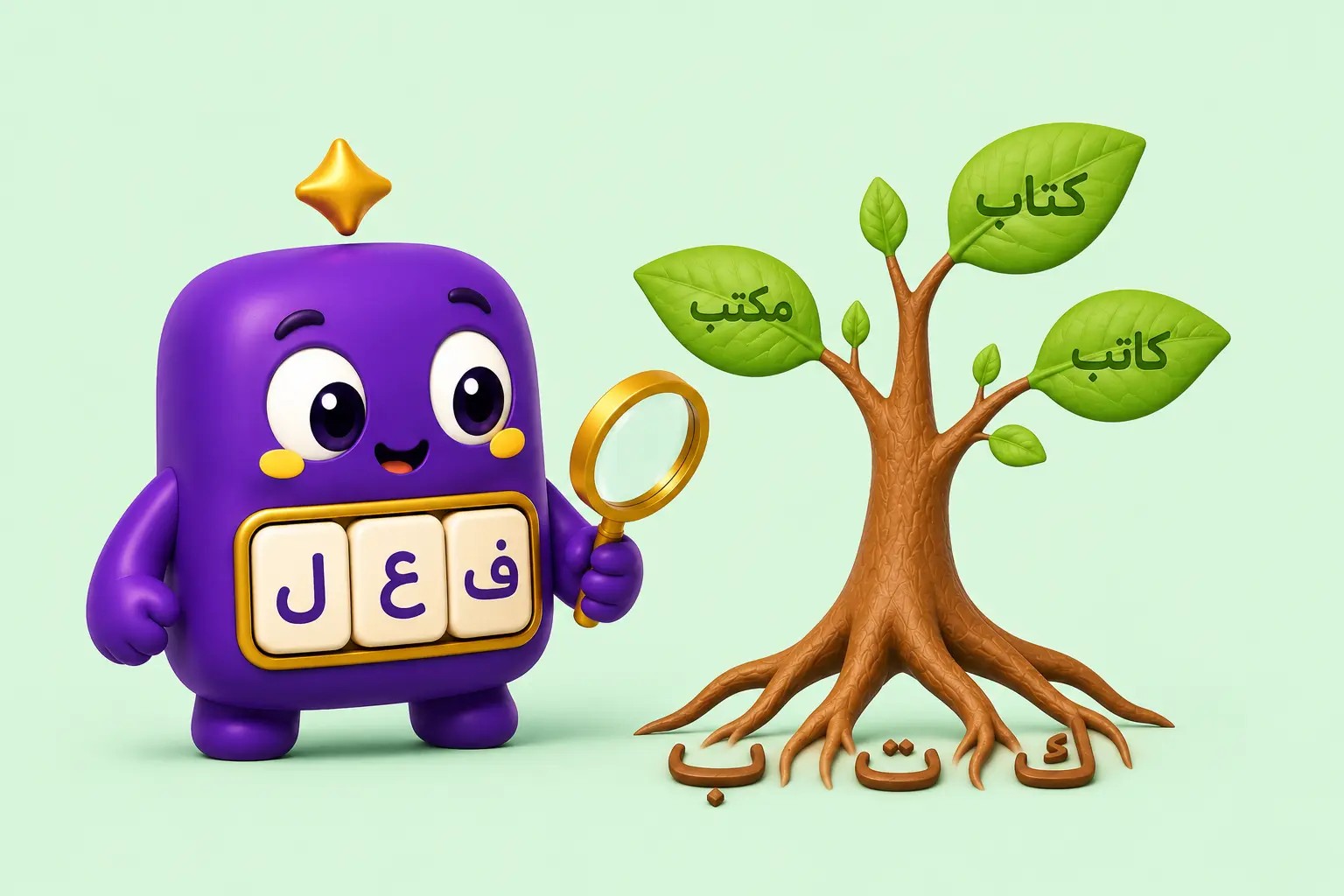
A morphological pattern is a template used to show the structure of an Arabic word. Arabic grammarians chose the letters ف ع ل to represent the root letters of a triliteral root:
| Letter position | Morphological term | Example from the root ك ت ب |
|---|---|---|
| First letter | Fāʾ al-kalima (فاء الكلمة) | ك |
| Second letter | ʿAyn al-kalima (عين الكلمة) | ت |
| Third letter | Lām al-kalima (لام الكلمة) | ب |
If we place the root ك ت ب into the pattern فَعَلَ, we replace fāʾ with kāf, ʿayn with tāʾ, and lām with bāʾ:
فَعَلَ ← كَتَبَ كَتَبَ — kataba — "to write" or "he wrote"
The vowel marks, added letters, and consonant doubling remain part of the pattern's template.
What Is the Difference Between a Root and a Pattern?
The root and the pattern work together, but they are not the same thing.
- The root carries the general field of meaning.
- The pattern gives the word its structure and may add a new direction to its meaning.
Consider the family of the root ع ل م:
| Word | Pronunciation | Pattern | English meaning |
|---|---|---|---|
| عَلِمَ | ʿalima | فَعِلَ | to know |
| عَلَّمَ | ʿallama | فَعَّلَ | to teach |
| أَعْلَمَ | aʿlama | أَفْعَلَ | to inform |
| تَعَلَّمَ | taʿallama | تَفَعَّلَ | to learn |
The letters ع ل م remain present in all the verbs, but the change in template changes the verb's function and meaning.
Why Do Beginners Need to Know Patterns?
Beginners do not need to memorize dozens of morphological rules in their first week. They do, however, benefit from understanding the idea of patterns early on for three practical reasons.
First, a pattern helps them recognize the root inside a long word. When they see تَعَلَّمَ, they can separate the added tāʾ and the consonant doubling from the root letters ع ل م.
Second, it helps them organize vocabulary into families. Instead of memorizing دَرَسَ (darasa, "to study") and دَرَّسَ (darrasa, "to teach") as unrelated verbs, they understand the semantic relationship between them.
Third, it enables them to anticipate an approximate meaning of a new word. This prediction does not replace verification, but it makes reading faster and more deliberate.
Pattern One: فَعَلَ and Similar Forms
The first pattern is the basic triliteral verb: its three root letters appear without additional derivational letters. Its best-known past-tense forms are:
- فَعَلَ (faʿala)
- فَعِلَ (faʿila)
- فَعُلَ (faʿula)
This pattern usually expresses the verb's basic meaning, but the vowel on the middle letter cannot always be determined from the root alone. The verb must therefore be learned with its correct vowel marks and pronunciation.
Real Examples
| Verb | Pronunciation | English meaning | Example |
|---|---|---|---|
| كَتَبَ | kataba | to write | كَتَبَ الطَّالِبُ رِسَالَةً. |
| فَهِمَ | fahima | to understand | فَهِمَ الطَّالِبُ السُّؤَالَ. |
| كَبُرَ | kabura | to grow or become big | كَبُرَ الطِّفْلُ سَرِيعًا. |
كَتَبَ الطَّالِبُ رِسَالَةً. Kataba al-ṭālibu risālatan. "The student wrote a letter."
فَهِمَ الطَّالِبُ السُّؤَالَ. Fahima al-ṭālibu al-suʾāla. "The student understood the question."
كَبُرَ الطِّفْلُ سَرِيعًا. Kabura al-ṭiflu sarīʿan. "The child grew quickly."
No single meaning unites all Form I verbs. It is often the lexical starting point, so whenever possible, the past tense, present tense, and verbal noun should be learned together.
Pattern Two: فَعَّلَ
The pattern فَعَّلَ (faʿʿala) can be recognized by the shadda on the middle letter. The shadda means that the consonant is pronounced twice; it is not merely a written mark that can be ignored.
This pattern may express meanings such as:
- causing someone to perform the action
- intensifying or repeating the action
- directing the action toward several things
These are common tendencies, not absolute rules.
From Knowing to Teaching
عَلِمَ ← عَلَّمَ
- عَلِمَ — ʿalima — "to know"
- عَلَّمَ — ʿallama — "to teach"
Someone who knows possesses knowledge, while someone who teaches passes that knowledge on to another person.
عَلَّمَتِ الْمُدَرِّسَةُ الطُّلَّابَ قَاعِدَةً جَدِيدَةً. ʿAllamati al-mudarrisatu al-ṭullāba qāʿidatan jadīdatan. "The teacher taught the students a new rule."
From Studying to Teaching
دَرَسَ ← دَرَّسَ
- دَرَسَ — darasa — "to study"
- دَرَّسَ — darrasa — "to teach"
دَرَّسَ الْأُسْتَاذُ اللُّغَةَ الْعَرَبِيَّةَ. Darrasa al-ustādhu al-lughata al-ʿarabiyyata. "The teacher taught the Arabic language."
Intensification or Division
قَطَعَ ← قَطَّعَ
- قَطَعَ — qaṭaʿa — "to cut"
- قَطَّعَ — qaṭṭaʿa — "to cut up" or "to cut into pieces"
قَطَّعَ الطَّبَّاخُ الْخُضْرَوَاتِ. Qaṭṭaʿa al-ṭabbākhu al-khuḍrawāti. "The cook cut the vegetables into pieces."
Pattern Three: فَاعَلَ
The pattern فَاعَلَ (fāʿala) is formed by adding an alif after the first root letter. In many verbs, it is associated with participation or directing an action toward another party.
Common Examples
| Verb | Pronunciation | English meaning |
|---|---|---|
| شَارَكَ | shāraka | to participate or share |
| سَاعَدَ | sāʿada | to help |
| نَاقَشَ | nāqasha | to discuss |
| قَابَلَ | qābala | to meet |
شَارَكَتْ لَيْلَى فِي الْمُسَابَقَةِ. Shārakat Laylā fī al-musābaqati. "Layla participated in the competition."
سَاعَدَ الْأَخُ أُخْتَهُ. Sāʿada al-akhu ukhtahu. "The brother helped his sister."
نَاقَشَ الطُّلَّابُ الْفِكْرَةَ. Nāqasha al-ṭullābu al-fikrata. "The students discussed the idea."
Not every verb necessarily indicates literal mutual participation. The verb سَاعَدَ requires someone who receives help, but it does not necessarily mean that both parties helped each other. Context and the dictionary determine the precise meaning.
Pattern Four: أَفْعَلَ
The pattern أَفْعَلَ (afʿala) begins with a hamza and often conveys causation: the subject causes something to happen or moves a person or thing into a new state.
From Being Present to Bringing
حَضَرَ ← أَحْضَرَ
- حَضَرَ — ḥaḍara — "to be present" or "to attend"
- أَحْضَرَ — aḥḍara — "to bring"
Bringing is causing a person or thing to be present.
أَحْضَرَ الطَّالِبُ كِتَابَهُ. Aḥḍara al-ṭālibu kitābahu. "The student brought his book."
From Going Out to Taking Out
خَرَجَ ← أَخْرَجَ
- خَرَجَ — kharaja — "to go out"
- أَخْرَجَ — akhraja — "to take out"
أَخْرَجَتْ مَرْيَمُ الْمِفْتَاحَ مِنْ حَقِيبَتِهَا. Akhrajat Maryamu al-miftāḥa min ḥaqībatihā. "Maryam took the key out of her bag."
Another Common Example
أَرْسَلَ الْمُدِيرُ الرِّسَالَةَ. Arsala al-mudīru al-risālata. "The manager sent the message."
The verb أَرْسَلَ (arsala, "to send") follows the pattern أَفْعَلَ, but learners do not need to construct a complete causative explanation every time they use it. It is enough to know its pattern and its actual meaning in use.
Pattern Five: تَفَعَّلَ
The pattern تَفَعَّلَ (tafaʿʿala) begins with tāʾ and has a shadda on the second root letter. A recurring morphological relationship exists between this pattern and فَعَّلَ.
In many cases, فَعَّلَ indicates causing an action in someone else, while تَفَعَّلَ indicates that the action occurs in the subject or is acquired gradually.
Teaching and Learning
عَلَّمَ ← تَعَلَّمَ
- عَلَّمَ — ʿallama — "to teach"
- تَعَلَّمَ — taʿallama — "to learn"
تَعَلَّمَتْ سَارَةُ الْعَرَبِيَّةَ. Taʿallamat Sāratu al-ʿarabiyyata. "Sarah learned Arabic."
Reminding and Remembering
ذَكَّرَ ← تَذَكَّرَ
- ذَكَّرَ — dhakkara — "to remind"
- تَذَكَّرَ — tadhakkara — "to remember"
تَذَكَّرْتُ مَوْعِدَ الدَّرْسِ. Tadhakkartu mawʿida al-darsi. "I remembered the lesson time."
Change
تَغَيَّرَ الطَّقْسُ فِي الْمَسَاءِ. Taghayyara al-ṭaqsu fī al-masāʾi. "The weather changed in the evening."
This pattern may also indicate gradual development, affected effort, or taking on a particular quality, but its precise meaning depends on the verb itself.
A Visual Comparison of the Five Patterns
| Pattern | Distinguishing feature | Common semantic tendency | Example | Pronunciation | Meaning |
|---|---|---|---|---|---|
| فَعَلَ | Three root letters | Basic meaning | كَتَبَ | kataba | to write |
| فَعَّلَ | Doubling of the middle letter | Causation or intensification | عَلَّمَ | ʿallama | to teach |
| فَاعَلَ | Alif after the first letter | Participation or interaction with another party | شَارَكَ | shāraka | to participate |
| أَفْعَلَ | Initial hamza | Causation or transition | أَخْرَجَ | akhraja | to take out |
| تَفَعَّلَ | Tāʾ and a shadda | Acquiring the action or its occurring in the subject | تَعَلَّمَ | taʿallama | to learn |
One Family in a Quick Diagram
Root: ع ل م — associated with knowledge and learning
عَلِمَ (ʿalima, to know) ← عَلَّمَ (ʿallama, to teach) ← أَعْلَمَ (aʿlama, to inform) ← تَعَلَّمَ (taʿallama, to learn)
The order of the diagram does not mean that each verb is derived directly from the one before it. Its purpose is to show how the same root works within different templates.
How Do You Identify a Verb's Pattern?
Begin with a few simple steps:
- Read the fully vocalized verb, because vowel marks and the shadda are part of its structure.
- Look for the letters that may belong to the root.
- Notice added letters, such as hamza, tāʾ, or alif.
- Match the root letters with ف ع ل.
- Keep the vowel marks and added letters in their places.
Applying the Process to تَعَلَّمَ
- Word: تَعَلَّمَ
- Pronunciation: taʿallama
- Meaning: "to learn"
- Root: ع ل م
- Added letters or morphological features: an initial tāʾ and doubling of the lām
- Pattern: تَفَعَّلَ
Applying the Process to شَارَكَ
- Word: شَارَكَ
- Pronunciation: shāraka
- Meaning: "to participate"
- Root: ش ر ك
- Visible feature: an alif after the first letter
- Pattern: فَاعَلَ
Common Mistakes When Learning Patterns
Believing that a pattern reveals the complete meaning. A pattern helps you move closer to the meaning, but it does not provide a guaranteed dictionary definition. Learn the verb in a sentence, then consult a reliable dictionary when needed.
Ignoring vowel marks. A word's structure and pronunciation change when its vowel marks change. It is therefore not enough to write the consonants alone when learning a new verb.
Ignoring the shadda. There is a clear difference between دَرَسَ (darasa, "to study") and دَرَّسَ (darrasa, "to teach"). The shadda in the second verb represents genuine doubling of the middle consonant.
Assuming that every root occurs in every pattern. Not every root has a verb in use in every pattern. Some forms are theoretically possible but are not actually used, or they carry a specialized idiomatic meaning. Learn words that occur in real usage, and do not invent a verb from the pattern alone.
Studying a pattern away from its word family. A pattern is easier to remember when you place verbs from the same root side by side: عَلِمَ (ʿalima, "to know"), عَلَّمَ (ʿallama, "to teach"), أَعْلَمَ (aʿlama, "to inform"), and تَعَلَّمَ (taʿallama, "to learn").
Did You Know?
Many Arabic dictionaries arrange their entries by roots rather than by the word's complete form. You may therefore look for تَعَلَّمَ (taʿallama, "to learn") under the root ع ل م, rather than under the letter tāʾ.
Knowing the root and pattern is not useful only in a morphology lesson. It is a practical skill that helps you use dictionaries, understand word families, and recognize connections among vocabulary items that may initially appear different.
Summary
- The root carries the general field of meaning, while the pattern gives the word its morphological template.
- فَعَلَ commonly represents the basic triliteral verb and its core meaning.
- فَعَّلَ may indicate causation, intensification, or repetition.
- فَاعَلَ is often associated with participation or interaction with another party.
- أَفْعَلَ conveys causation in many verbs.
- تَفَعَّلَ may indicate acquiring the action or its occurring in the subject.
- The meanings associated with patterns are common tendencies, not absolute rules.
- The best way to learn patterns is to compare words that share the same root.
- Do not rely on the template alone; check the word's actual meaning and its use in context.
Frequently Asked Questions
How Many Arabic Verb Patterns Are There?
The triliteral verb is generally studied through the basic form and a set of derived patterns. Ten main patterns are widely presented in Arabic teaching materials, while traditional morphology books include other, less common forms. Beginners do not need to learn them all at once.
Do I Have to Memorize All Ten Patterns?
Not at the beginning. Start with the patterns you encounter frequently, and learn each one through a real word family. Moving on to patterns such as تَفَاعَلَ (tafāʿala), اِنْفَعَلَ (infaʿala), اِفْتَعَلَ (iftaʿala), and اِسْتَفْعَلَ (istafʿala) will then become easier.
Does Each Pattern Have a Fixed Meaning?
No. Each pattern has common semantic tendencies, but a verb may develop a specialized meaning through usage and linguistic evolution. The pattern helps with analysis and prediction, but it does not replace a dictionary.
What Is the Easiest Pattern for Beginners?
Most learners begin with the basic triliteral verb, such as كَتَبَ (kataba, "to write") and فَتَحَ (fataḥa, "to open"). Moving on to فَعَّلَ and تَفَعَّلَ is then useful because the relationship between them is clear in many pairs.
What Is the Difference Between فَعَّلَ and أَفْعَلَ?
Both patterns may express causation, but they are not automatically interchangeable. We say: عَلَّمَ (ʿallama, "to teach") and أَعْلَمَ (aʿlama, "to inform"). Both come from the root ع ل م, but each verb has its own meaning and usage.
How Can I Identify a Verb's Root Letters?
Compare the verb with other words in its family, and carefully remove common markers of derivation. For example, comparing عَلِمَ, عَلَّمَ, أَعْلَمَ, and تَعَلَّمَ reveals that the shared letters are ع ل م.
Do Patterns Help with Learning Vocabulary?
Yes. Instead of storing every word separately, you can connect several words to one root and then notice the template's function in each word. This organizes vocabulary more clearly, but it does not remove the need to learn context.
Do These Patterns Apply to Nouns as Well?
Nouns, verbal nouns, and derived forms also have morphological patterns. These include فَاعِل (fāʿil), which is often used for the active participle, and مَفْعُول (mafʿūl) for the passive participle. This article, however, focuses on five verb patterns.
Practice What You Have Learned with Rooto
Do not try to memorize the patterns as though they were a list of symbols. Watch them work inside real words.
Go to the Rooto Machine, then press SPIN. The machine will show you a random root together with a word derived from it, its pattern, an Arabic example, and its English translation. Try to identify the root letters first, then compare your analysis with the pattern displayed on the machine.
If you are still unsure about the difference between a root and a pattern, read What Is an Arabic Root? A Beginner's Guide next on the Rooto blog.
References
- Ryding, Karin C. (2005). A Reference Grammar of Modern Standard Arabic. Cambridge University Press — described by the publisher as "a comprehensive handbook on the structure of Arabic".
- Wright, William. A Grammar of the Arabic Language. Third Edition. Cambridge University Press — a classic 19th-century reference grammar of Classical Arabic.
- Dendane, Zoubir. (2007). "An Overview of Verb Morphology in Arabic." Revue Maghrébine des Langues — the paper's abstract notes that "Arabic morphology displays three types of affixation to the verb-root".
- Ford, David C. (2009). "The Three Forms of Arabic Causative." OPAL, No. 2 — a study analyzing the three causative verb patterns in Arabic.